


A first tanker carrying Russian diesel to the United States under a new import agreement has set sail, the Kremlin said Friday, two weeks after President Donald Trump said he struck a deal with President Vladimir Putin despite Moscow's invasion of Ukraine.
"The first oil tanker has sailed off to customers, and regular supplies will continue," Kremlin spokesman Dmitry Peskov said without elaborating.
 Full Story
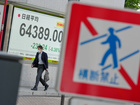
World shares and U.S. futures retreated on Thursday as oil prices jumped more than 2% following a report by Iran's state television that seven oil tankers caught fire and were damaged in the Strait of Hormuz.
If the report is verified, it would be the largest number of vessels damaged in the waterway in a single day since the start of the Iran war on Feb. 28.
 Full Story
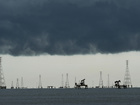
A single figure sets Venezuela apart from the rest of the world: 303 billion barrels of so-called proven oil reserves. But experts say the country's estimate is inherently problematic and far from proven — rooted in exaggerated, aging data from a corrupt government.
The number has long been touted by politicians and investors as an important measure of untapped energy potential, most recently by President Donald Trump's administration in detailing a sweeping deal for the U.S. to take control of some Venezuelan reserves.
 Full Story
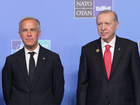
Canadian Prime Minister Mark Carney arrived in Turkey on Thursday for a two-day visit seeking to forge a new partnership as Canada looks to reduce its dependence on the United States.
Carney is making the first bilateral visit by a Canadian prime minister to Turkey, although he traveled to Ankara in July to attend the NATO summit. He is scheduled to meet with Turkish President Recep Tayyip Erdogan and other officials before traveling to Istanbul for talks with Turkish business groups as the two countries seek to deepen trade ties.
 Full Story
The San Francisco chapter of SEAL (Social and Economic Action for Lebanon) once again turned out for Lebanon on Sunday, October 18, 2026, raising close to $800,000 for Lebanese farmers at its annual benefit gala at the Four Seasons Hotel in Palo Alto.
The nonprofit has worked from the U.S. East Coast for more than a quarter century, and this year marked its fifth consecutive gala in California. More than 200 guests and donors filled the ballroom, hosted by Roula Tamer, chair of SEAL’s board of directors, alongside fellow board members and the event committee.
 Full Story
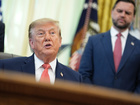
President Bill Clinton famously said he could feel voters' pain over the economy. But these days, when it comes to questions about high prices, President Donald Trump insists that the pain is his.
"They hit me with affordability, and that's the first time I ever heard the word used," he complained in Nebraska earlier this month.
 Full Story
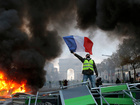
The images of France's riots posted and broadcast around the world have cast a pall on the country's important tourism sector, with many fearing worse consequences if violence returns.
 Full Story
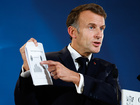
French President Emmanuel Macron said Wednesday that he had secured gas from Qatar during his Gulf tour, as he seeks to bring down the price of energy following violent protests sparked by rising living costs.
 Full Story
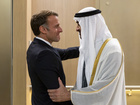
French President Emmanuel Macron has secured the delivery of an additional 200,000 tons of diesel per month from the United Arab Emirates and Bahrain during a tour of the Gulf, the French presidency said on Tuesday.
He obtained commitments for around 100,000 tons per month from the Emirates, while an additional 100,000 tons monthly will be secured during the stop in Bahrain, the Elysee Palace said.
 Full Story
U.S. futures are mostly lower as artificial-intelligence stocks come under pressure again and oil prices rose amid sporadic fighting in the Middle East.
Futures for the S&P 500 fell 0.1% on Tuesday, while those for the Nasdaq declined 0.5%. Futures for the Dow Jones Industrial Average gained 0.2%.
 Full Story


