


Spotlight
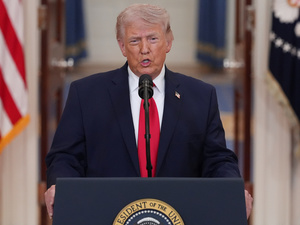
Iran fired more missiles at Israel and Gulf Arab states Thursday, demonstrating Tehran's continued ability to attack even as U.S. President Donald Trump claimed the threat from the country was nearly eliminated and predicted the war would end soon.
Iran's strikes on its neighbors along with its chokehold on the Strait of Hormuz have disrupted the world's energy supplies with effects far beyond the Middle East. That has proved to be Iran's greatest strategic advantage in the war. Britain planned to hold a call with nearly three dozen countries about how to reopen the strait, through which 20% of all traded oil passes in peacetime, once the fighting is over.
 Full Story
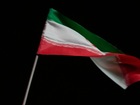
Almost three dozen countries will meet Thursday in an effort to exert diplomatic and political pressure to reopen the Strait of Hormuz, a vital shipping route that has been choked off by the U.S.-Israeli war against Iran.
British Prime Minister Keir Starmer said the virtual meeting chaired by Foreign Secretary Yvette Cooper "will assess all viable diplomatic and political measures we can take to restore freedom of navigation, guarantee the safety of trapped ships and seafarers and to resume the movement of vital commodities."
 Full Story
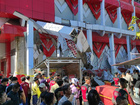
An undersea magnitude 7.4 earthquake toppled buildings in parts of northern Indonesia, sent people fleeing from their homes, killed at least one person and generated a small tsunami Thursday.
Strong shaking lasting 10 to 20 seconds was felt in Bitung in North Sulawesi province as well as in Ternate city in neighboring North Maluku province, according to the Disaster Management Agency. The provinces border the Molucca Sea, where the quake was centered.
 Full Story
Iran’s supreme leader vowed Wednesday his nation will continue to support anti-Israeli forces in the Mideast.
The message from Ayatollah Mojtaba Khamenei, like others since he was named Iran’s new supreme leader, came in a statement read on air by a state television anchor.
 Full Story
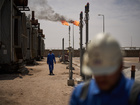
World shares were higher and oil fell briefly below $100 per barrel on Wednesday after U.S. stocks soared to their best day in almost a year on renewed hopes that the Iran war could soon end.
The renewed optimism over a possible de-escalation of the Iran war, which is in its fifth week, came after U.S. President Donald Trump said on Tuesday the United States will be done attacking Iran probably in two to three weeks, and that the U.S. "will not have anything to do with" what happens next in the Strait of Hormuz.
 Full Story
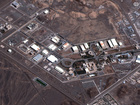
Should the U.S. decide to send in military forces to secure Iran's uranium stockpile, it would be a complex, risky and lengthy operation, fraught with radiation and chemical dangers, according to experts and former government officials.
U.S. President Donald Trump has offered shifting reasons for the war in Iran but has consistently said a primary objective is ensuring the country will "never have a nuclear weapon." Less clear is how far he is willing to go to seize Iran's nuclear material.
 Full Story
Iran hit an oil tanker off the coast of Qatar and Kuwait's airport on Wednesday while airstrikes battered Tehran — an unrelenting tempo hours after U.S. President Donald Trump said he was nearly ready to wind down the war.
Trump, who is scheduled to address the nation later in the day, said he could walk away from the war in two to three weeks once he felt confident Iran would not be able to build a nuclear weapon — even if Tehran does not agree to a ceasefire.
 Full Story
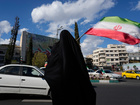
U.S. President Donald Trump said the military could end its Iran offensive in two to three weeks and will shift responsibility for the Strait of Hormuz to countries that rely on it for oil and shipping as the White House announced a prime-time presidential address Wednesday evening on the war.
Trump said Tuesday that U.S. forces would end operations in Iran "very soon," evoking the timeline of two to three weeks as his administration pursues talks with Iranian authorities while continuing its aerial campaign.
 Full Story
The Lebanese army said its forces have largely withdrawn from some border towns as Israeli troops continue to push a ground invasion into the country.
The military said in a statement that troops had to reposition to prevent being dispersed and cut off from support lines "as a result of the escalation of the Israeli aggression".
 Full Story
Beirut is bursting.
It's been a month since Hezbollah fired rockets into Israel after the U.S.-Israeli attack on its patron, Iran, triggering Israeli bombardment of Lebanon and a ground invasion. Since then, more than 1 million people from southern and eastern Lebanon and Beirut's southern suburbs have fled. Many have crammed into the ever-tighter spaces of the country's capital where the bombs have not yet fallen.
 Full Story


