


For months, Istanbul restaurant Tarihi Balikca tried to absorb the surging cost of the sunflower oil its cooks use to fry fish, squid and mussels.
But in early April, with oil prices nearly four times higher than they were in 2019, the restaurant finally raised its prices. Now, even some longtime customers look at the menu and walk away.
 Full Story
The last time Russia invaded Ukraine, in 2014, outraged world leaders booted Russia out of the Group of Eight industrialized nations, which quickly rebranded itself the Group of Seven.
Eight years later, the G-7 is still holding at seven — a collection of countries that meet to talk through big issues like trade, economics and security.
 Full Story
The first and most popular cryptocurrency, bitcoin, launched more than a decade ago. Yet for all the relentless buzz, relatively few are well versed in cryptocurrencies or the blockchain, the technology on which they're built.
Despite the evangelizing by and rising profile of some investors, a 2021 poll by Pew Research Center found that just 16% of Americans said they have ever invested in cryptocurrencies. That broadened to 31% between the ages of 18 and 29 and to 43% of men in that age range.
 Full Story
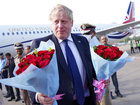
British Prime Minister Boris Johnson is trying to set aside his political troubles and focus on economic ties and the war in Ukraine during a long-delayed official trip to India.
Johnson landed in the western state of Gujarat on Thursday, kicking off a two-day visit that will see him meet Prime Minister Narendra Modi in New Delhi on Friday.
 Full Story
China's credit card processor has refused to work with banks in Russia for fear of being targeted by sanctions over its war on Ukraine, cutting off a possible alternative after Visa and Mastercard stopped serving them, according to the Russian news outlet RBC.
UnionPay's decision affects Sberbank, Russia's biggest commercial bank, and smaller institutions, RBC reported Wednesday. It cited five unidentified sources in large Russian banks.
 Full Story
Global shares were mixed in choppy trading Thursday, as inflation worries and the war in Ukraine left investors cautiously optimistic.
European shares were mostly higher in early trading after a mixed session in Asia. Oil prices advanced and U.S. futures were higher.
 Full Story
Europe is struggling to find ways to stop paying Russia $850 million a day for energy and hit the Kremlin's finances over its invasion of Ukraine. Leaders of the 27-member European Union are finding that reversing decades of dependence on Russian oil and natural gas is not a simple matter.
The EU is now discussing sanctions on Russian oil, including a possible boycott. Here is what such a move could mean for people in Europe and the rest of the world:
 Full Story
The Lebanese currency on Thursday declined on the black market, with a rate exceeding 26,000 against the dollar.
It dropped to a rate of 26,500 as the country prepares for its parliamentary elections in May.
 Full Story
Japan's weakening yen raised further alarm in Tokyo on Wednesday as the government reported a bigger-than-expected trade deficit largely due to soaring costs for imports of oil, food and other necessities.
The deficit of 412 billion yen ($3.2 billion) for March was lower than the previous month's 670 billion yen but was quadruple analysts' estimates and a reversal of the 615 billion yen surplus recorded a year earlier for the world's third-largest economy.
 Full Story
European stocks rose Wednesday but gains were capped as Russia continued its new offensive in eastern Ukraine, dealers said.
 Full Story

