


Spotlight
-
 Middle East
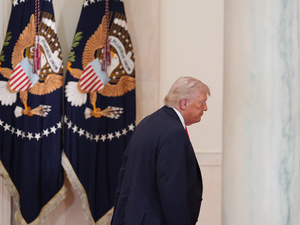
Iran's military vows 'crushing' attacks against US, Israel after Trump threats
Israel said it came under Iranian missile fire on Thursday after U.S. President Donald Trump threatened to bomb the Islamic republic into the "Ston...
Middle East
Iran's military vows 'crushing' attacks against US, Israel after Trump threats
Israel said it came under Iranian missile fire on Thursday after U.S. President Donald Trump threatened to bomb the Islamic republic into the "Ston...
-
 Middle East
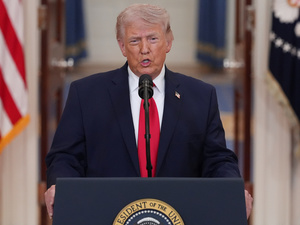
Trump says Iran war almost over, warns of weeks more heavy strikes
President Donald Trump said U.S. forces will "finish the job" in Iran soon as "core strategic objectives are nearing completion," offering a full-t...
Middle East
Trump says Iran war almost over, warns of weeks more heavy strikes
President Donald Trump said U.S. forces will "finish the job" in Iran soon as "core strategic objectives are nearing completion," offering a full-t...
French President Emmanuel Macron said on Thursday that U.S. and Israeli strikes on Iran will not provide a durable solution to the issue of Tehran's nuclear program and that Trump cannot keep "contradicting" himself every day on Iran.
"A targeted military action, even for a few weeks, will not allow us to resolve the nuclear issue in the long term," Macron said in South Korea.
 Full Story
Iran fired more missiles at Israel and Gulf Arab states Thursday, demonstrating Tehran's continued ability to attack even as U.S. President Donald Trump claimed the threat from the country was nearly eliminated and predicted the war would end soon.
Iran's strikes on its neighbors along with its chokehold on the Strait of Hormuz have disrupted the world's energy supplies with effects far beyond the Middle East. That has proved to be Iran's greatest strategic advantage in the war. Britain planned to hold a call with nearly three dozen countries about how to reopen the strait, through which 20% of all traded oil passes in peacetime, once the fighting is over.
 Full Story
Almost three dozen countries will meet Thursday in an effort to exert diplomatic and political pressure to reopen the Strait of Hormuz, a vital shipping route that has been choked off by the U.S.-Israeli war against Iran.
British Prime Minister Keir Starmer said the virtual meeting chaired by Foreign Secretary Yvette Cooper "will assess all viable diplomatic and political measures we can take to restore freedom of navigation, guarantee the safety of trapped ships and seafarers and to resume the movement of vital commodities."
 Full Story
The U.S. and Iran are discussing a potential deal that would involve a ceasefire in exchange for Iran reopening the Strait of Hormuz, three U.S. officials told U.S. news portal Axios on Wednesday.
 Full Story
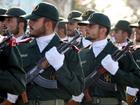
Iran's Revolutionary Guards insisted on Wednesday that the strategic strait of Hormuz will remain closed to the country's "enemies" as U.S. President Donald Trump said he would only consider a ceasefire if it was reopened.
 Full Story
U.S. President Donald Trump said Wednesday that Iran has asked for a ceasefire but that the United States would only consider this once the Strait of Hormuz is clear for shipping.
Iran's president "has just asked the United States of America for a CEASEFIRE!" Trump wrote on his Truth Social platform. "We will consider when Hormuz Strait is open, free, and clear. Until then, we are blasting Iran into oblivion or, as they say, back to the Stone Ages!!!"
 Full Story
President Emmanuel Macron said on Wednesday France had not been consulted and wasn't taking part in the war against Iran, after U.S. leader Donald Trump criticized the country's overflight ban on planes carrying military supplies for the conflict.
 Full Story
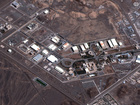
Should the U.S. decide to send in military forces to secure Iran's uranium stockpile, it would be a complex, risky and lengthy operation, fraught with radiation and chemical dangers, according to experts and former government officials.
U.S. President Donald Trump has offered shifting reasons for the war in Iran but has consistently said a primary objective is ensuring the country will "never have a nuclear weapon." Less clear is how far he is willing to go to seize Iran's nuclear material.
 Full Story
Iran hit an oil tanker off the coast of Qatar and Kuwait's airport on Wednesday while airstrikes battered Tehran — an unrelenting tempo hours after U.S. President Donald Trump said he was nearly ready to wind down the war.
Trump, who is scheduled to address the nation later in the day, said he could walk away from the war in two to three weeks once he felt confident Iran would not be able to build a nuclear weapon — even if Tehran does not agree to a ceasefire.
 Full Story
U.S. President Donald Trump said the military could end its Iran offensive in two to three weeks and will shift responsibility for the Strait of Hormuz to countries that rely on it for oil and shipping as the White House announced a prime-time presidential address Wednesday evening on the war.
Trump said Tuesday that U.S. forces would end operations in Iran "very soon," evoking the timeline of two to three weeks as his administration pursues talks with Iranian authorities while continuing its aerial campaign.
 Full Story


