


Israeli strike on Damascus airport kills 4, puts it out of service for hours
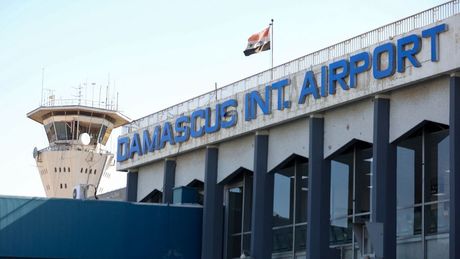
Israeli missile strikes on the Syrian capital's airport Monday killed four people including two soldiers and closed the runways for several hours, a rights monitor said.
This is the second time in less than seven months that Damascus International Airport -- where Iranian-backed armed groups and Lebanese Hezbollah fighters are present -- has been hit by Israel.
The attack around 2:00 am (2300 GMT) put the airport out of service until 9:00 am (0600 GMT), Syria's state news agency SANA and officials said.
Israel carried out the strike with "barrages of missiles targeting Damascus International Airport and its surroundings," a military source told SANA, which reported that two Syrian soldiers were killed and two others wounded.
But the Britain-based monitoring group Syrian Observatory for Human Rights, which relies on a wide network of sources on the ground in Syria, said "four fighters including two Syrian soldiers were killed."
The missiles also hit "positions for Hezbollah and pro-Iranian groups inside the airport and its surroundings, including a weapons warehouse," said Rami Abdul Rahman, head of the Observatory.
Flights later resumed after repairs of "the damage caused by Israeli aggression," Syria's transport ministry said in a statement.
"Air traffic has returned after we restored work on one of the runways, while the process of repairing the second runway continues," transport ministry official Suleiman Khalil told AFP.
- 'Persistent military action' -
Since civil war broke out in Syria in 2011, Israel has carried out hundreds of air strikes against its neighbor, targeting government troops as well as allied Iran-backed forces and fighters from Lebanon's Hezbollah.
The Israeli army, which said Monday that "it does not comment on foreign reports," has repeatedly said it will not allow its archfoe Iran to gain a foothold in Syria.
On December 28, the head of the Israeli army's Operations Directorate, Major General Oded Basiuk, presented the military's "operational outlook" for 2023, where he said that the force "will not accept Hezbollah 2.0 in Syria," the army said on Twitter.
"Our course of action in Syria is an example of how continuous and persistent military action leads to shaping and influencing the entire region," Basiuk added.
The following day, Israel's military chief Aviv Kohavi gave a speech in which he noted "the armies Iran is trying to establish throughout the Middle East" as one of the facets of Tehran's threat to Israel.
"The most important thing to us is the entrenchment, not just through proxies, but through arms, infrastructure, the Iranians are trying to set up in the area near us, primarily in the Syria-Lebanon region," Kohavi said.
- More than a decade of war -
The airport is in a region southeast of Damascus where Iran-backed groups, including Hezbollah, regularly operate.
The last time the airport was out of service was in June 2022 -- also after an Israeli missile strike.
The runway, control tower, three hangars, warehouses and reception rooms were badly damaged in that attack -- forcing the airport to close for about two weeks and flights to be suspended.
Just as in Monday's attack, the Observatory said at the time that the strikes had targeted nearby warehouses used as weapons depots by Iran and Hezbollah.
 02 January 2023, 11:31
02
02 January 2023, 11:31
02
Briefly out of service is not enough. They should make it perfectly clear that if you use the airport to receive weapons for Iranian proxies, you are not going to have an airport at all...
02 January 2023, 22:01
00
It seems that the Israelis are sending enough messages trying to make it perfectly clear to the Syrian government, but presumably they don't (or don't want to) understand.
Which self-respecting government allows a foreign country to establish a military base at their only international airport? Unfortunately it seems that Lebanon is heading in the same direction.
 02 January 2023, 14:37
11
02 January 2023, 14:37
11
Notice how they avoid killing Hezbollah militiamen, they aim at Syrians and associates.

