


War in the Middle East: Latest developments
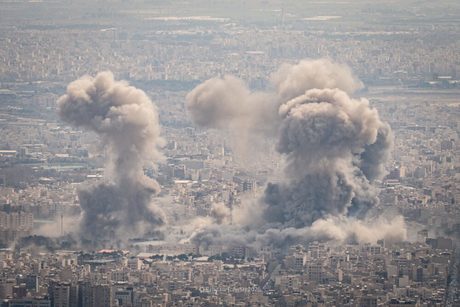
Here are the latest developments in the Middle East war:
- UAE arrests -
Police in the United Arab Emirates (UAE) said they have arrested 109 people for unauthorized filming and posting "misleading" information during the war.
- Caspian hit again -
Israel's military said it was launching strikes in Iran's Noor region on the shores of the Caspian Sea, a day after carrying out its first strikes against Iranian targets in the body of water bordered by five nations.
- Syria strike -
Israel's military said it had struck Syrian army camps in response to what it called attacks against the Druze community in the southern Sweida province.
Israeli Defense Minister Israel Katz said in a statement that "we will not allow the Syrian regime to exploit our war against Iran and Hezbollah to harm the Druze". Israel is home to a Druze community, the largest Arab minority serving in the Israeli military.
- Beirut sound barrier -
An Israeli warplane broke the sound barrier over Beirut on Friday morning, state media said, as AFP journalists heard loud booms reverberate across the city and in distant mountains.
- Cargo ships hit -
The United States and Israel struck 16 Iranian cargo vessels in port towns on the Gulf in attacks that burnt the vessels, local media reported.
- Syria 'harmony' -
Syrian President Ahmed al-Sharaa said he is working to keep his country out of the war.
"It is important to remember that Syria has always been an arena of conflict and strife during the past 15 years and before that, but today it is in harmony with all neighbouring countries regionally and internationally," he said, adding that Damascus stood "in full solidarity with the Arab states".
- UK 'participation' -
Iran's foreign minister told his UK counterpart in a phone call that Tehran would view any U.S. use of British bases as "participation in aggression".
"These actions will certainly be regarded as participation in aggression and will be recorded in the history of relations between the two countries," said Abbas Araghchi, according to a statement released by Iran's foreign ministry, which did not say when the phone call took place.
- Guards' spokesman killed -
Iran's Revolutionary Guards said in a statement on their website that their spokesman, Ali Mohammad Naini, had been killed in U.S.-Israeli strikes.
Earlier, Naini refuted remarks by Israeli Prime Minister Benjamin Netanyahu that Iran could no longer produce ballistic missiles, saying there was "no concern" and "even under wartime conditions we continue missile production".
- Crude prices dip -
Crude prices slipped, after U.S. and Israeli leaders said that Israel would no longer target any more of Tehran's energy infrastructure.
- Sri Lanka refusal -
Sri Lanka refused permission to the United States to station two of its warplanes at an airport in the island's south in early March, President Anura Kumara Dissanayake told parliament.
Sri Lanka maintains close ties with the United States, its biggest export market, and Iran which is a key buyer of tea, its main export commodity.
- Gulf attacks -
Drone attacks hit Kuwait's Mina Al-Ahmadi oil refinery, causing several fires but no casualties, state media said.
Earlier, Kuwaiti and Emirati authorities said air defenses were responding to missile and drone attacks and Saudi Arabia's defence ministry said it had intercepted and destroyed more than a dozen drones in the country's east and another in the north.
Bahrain's interior ministry said that shrapnel from an "Iranian aggression" caused a fire at a warehouse, which was brought under control and resulted in no injuries.
- UAE arrests -
UAE authorities have arrested at least five members of a "terrorist network" linked to Iran and Lebanese militant group Hezbollah, state media said.


