


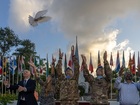
As the world marked the International Day of Peace and communities in south Lebanon continue to grapple with the consequences of conflict, peacekeepers marked the day with a small ceremony at UNIFIL headquarters in Naqoura on Monday evening.
“Peace is not something we address once a year; it is an enduring responsibility,” said UNIFIL Head of Mission and Force Commander Major General Diodato Abagnara in a short speech for the occasion. “We patrol, we keep channels of communication open with the parties to reduce the risk of misunderstanding and escalation. We work with the Lebanese Armed Forces as they assume greater responsibilities in the south.”
 Full Story
The Delegation of the European Union to Lebanon and the Samir Kassir Foundation have announced the results of the 21st edition of the Samir Kassir Award for Freedom of the Press, at a ceremony held at the Sursock Palace Gardens in Beirut.
Established with funding from the European Union, the Award is internationally recognized as a flagship prize for press freedom and the most prestigious journalism award in the Middle East, North Africa and Gulf region. Since 2006, the ceremony has been held annually to commemorate the assassination of Lebanese journalist Samir Kassir on 2 June 2005 in Beirut, and to celebrate his life, values, and intellectual and professional struggle.
 Full Story
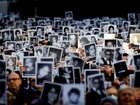
An Argentine judge on Monday formally charged seven Iranians and a Lebanese citizen for their alleged involvement in the 1994 bombing of a Jewish community center in Buenos Aires.
The decision marks another step toward a possible trial in absentia over the attack on July 18 that year, which killed 85 people and injured 300 more.
 Full Story
Prime Minister Nawaf Salam told United Nations chief Antonio Guterres on Monday that Lebanon needed a U.N.-sponsored international force to stay in the country's south after the current U.N. peacekeeping mandate expires.
The U.N. Interim Force in Lebanon (UNIFIL), which currently counts around 7,500 peacekeepers from 46 countries, has acted as a buffer between Lebanon and Israel since 1978.
 Full Story
Qatar and Turkey are spearheading secret contacts and efforts to resolve the situation in south Lebanon and subsequently address Hezbollah’s status, the Nidaa al-Watan newspaper reported on Monday.
“Indications suggest that each side is acting independently, with no unified initiative in place. The initial phase of these contacts focuses on de-escalating tensions in the south, with the aim -- should these efforts succeed -- of moving on to discuss the future of Hezbollah’s arsenal,” the daily said.
 Full Story
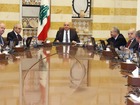
There is no intention to “make changes within the government,” though both the Presidency and the Premiership have “reservations regarding the performance of certain ministers,” sources told MTV on Monday.
 Full Story
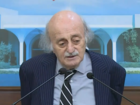
Former Progressive Socialist Party leader Walid Jumblat said Monday he would support the ongoing diplomatic efforts and the framework agreement if and only if they lead to an Israeli withdrawal from south Lebanon.
Jumblat told reporters after he met with President Joseph Aoun in Baabda that he would back Lebanon's negotiations with Israel "if they lead to a gradual or complete withdrawal" and a border demarcation.
 Full Story
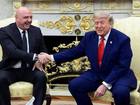
U.S. President Donald Trump has said that it was an “honor” to him to welcome President Joseph Aoun to the White House for a “truly historic visit,” the Lebanese presidency said on Monday, citing a letter sent by Trump.
 Full Story
Free Patriotic Movement chief Gebran Bassil has said that he distinguishes between the FPM’s position, Hezbollah's position, and the government's position regarding the talks with Israel.
“We do not refuse negotiation, but we want something in return. They (ruling authorities) depicted to the Lebanese that there is a major achievement, but what has actually been achieved is the destruction of the country rather than (Israeli) withdrawal,” Bassil said in an interview on Al-Jadeed TV, referring to the framework agreement between Lebanon and Israel.
 Full Story
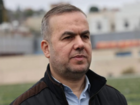
Hezbollah lawmaker Hassan Fadlallah questioned the President’s ability to succeed after creating what he termed a "deep rift" with a significant segment of the Lebanese public.
Fadlallah accused President Joseph Aoun of breaking core commitments he made to Hezbollah before his election.
 Full Story
