


US ambassador visits south Lebanon towns
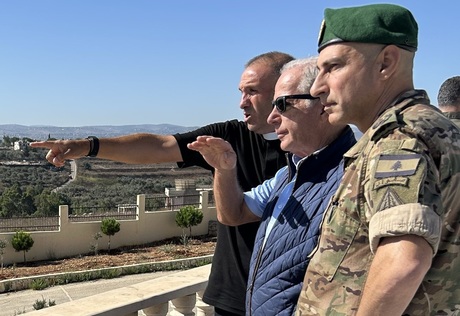
U.S. Ambassador to Lebanon Michel Issa on Tuesday visited the southern town of Zawtar al-Gharbiyeh, accompanied by a delegation from the state-run Council for Development and Reconstruction.
His first stop was the town’s church, which coincided with the movement of Israeli military vehicles in the adjacent town of Zawtar al-Sharqiyeh as an Israeli drone hovered over the area surrounding the church.
The town recently came under the control of the Lebanese Army as part of a framework agreement with Israel. The U.S.-backed June agreement states that the Israeli military will withdraw from areas of south Lebanon it occupied in parallel with the deployment of the Lebanese Army, starting with "pilot zones", under the condition that Hezbollah disarms.
Issa later inspected the bridge in the nearby town of Qaaqaaiyet al-Jisr, which had been destroyed during the latest war.
Al-Arabiya’s Al-Hadath channel meanwhile said that the ambassador’s visit to Zawtar al-Gharbiyeh is part of Washington’s efforts to push forward the so-called pilot zones scheme which was agreed on by Lebanon and Israel.
A town official meanwhile lamented that Issa did not coordinate his visit with the two towns' municipalities or residents. "He did not talk to anyone. He entered the church, took a picture in the face of the Israeli enemy and left," the official said.
Fresh talks between Israel and Lebanon over the implementation of the framework agreement were due to be held this month, but were postponed to October.
A source from the Lebanese presidency told AFP that during the last round of talks in August, Israel refused to discuss new "pilot zones" without ensuring that the Lebanese Army had full control of the first ones.
The Israeli and Lebanese ambassadors to Washington are due to meet this week to discuss the implementation of the agreement.
President Joseph Aoun also visited Zawtar al-Gharbiyeh on Saturday, where his office said he inspected army units and observed nearby Israeli military positions.
Violence declined following the June framework agreement and a wider U.S.-Iran deal, but Israel has pressed its attacks on Lebanon.
Hezbollah, which pulled Lebanon into the war in March with strikes on Israel, rejects the negotiations with Israel and refuses to disarm, but has not claimed any recent attacks.
Israeli strikes have killed more than 4,300 people since the hostilities began in March, according to Lebanese authorities.


